DHS Power G Family: Pure Wood to External Carbon—A Feel Map
PG2, PG9, PG5X, PG6A—four blades that share a name but feel nothing alike. Here's how each one communicates with your hand, from the all-wood baseline to the external ALC peak.
The DHS Power G series isn't a ladder where each step is "better" than the last. It's a map of feel—each blade represents a different deformation philosophy, and the right choice depends on what your hand wants to feel, not what your wallet wants to spend.
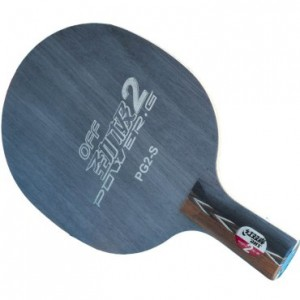
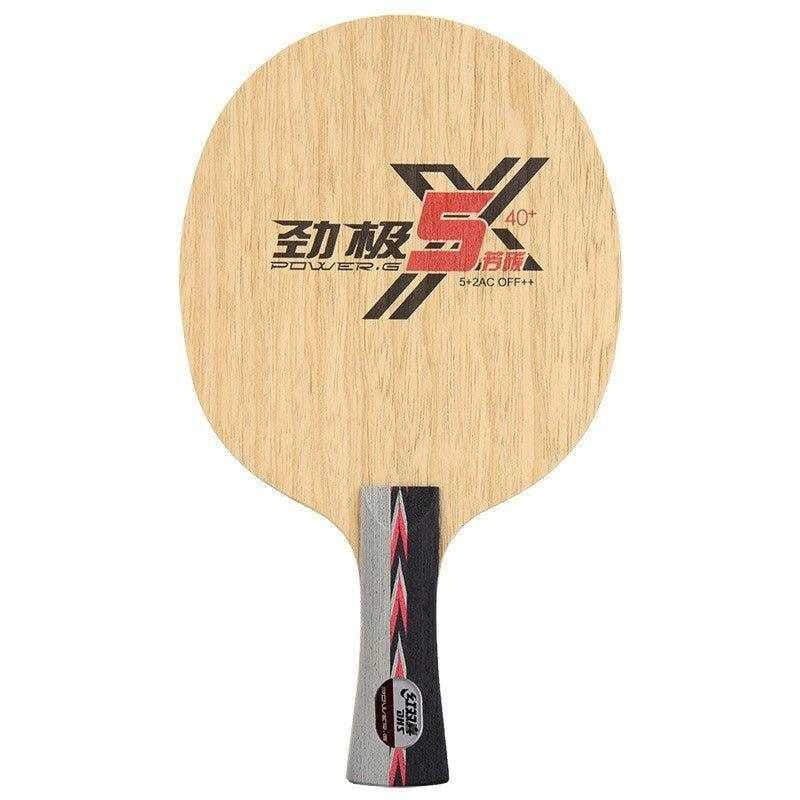
PG2 (around $28) is pure wood. PG9 (around $33) adds glass-carbon. PG5X (around $45) goes internal ALC. PG6A (around $45) goes external ALC. The carbon layer moves closer to the hitting surface as you move through the family, and that single variable reshapes everything—pocketing depth, catapult timing, and how much your hand knows about what the ball is doing.
The Pocketing Gradient
Pocketing—that moment where the ball sinks into the blade before release—shrinks as carbon moves closer to the surface.
PG2 gives you the most generous dwell in the family. The all-wood construction lets the ball sink deep, and you feel every millisecond of it. Short pushes, delicate drops, blocking exchanges—the PG2 tells you exactly where the ball is and what it's doing. The deformation zone extends well into the blade, creating a reassuring pocketing sensation that pure-wood players love.
PG9 tightens things up. Glass-carbon engages earlier in the compression cycle, so the ball doesn't sink as far. It's not harsh—the glass fiber is gentler than arylate carbon—but the dwell window is noticeably shorter than the PG2. You still get feedback, just less of it.
PG5X and PG6A sit in similar territory for dwell depth, but the feel quality differs. Internal ALC on the PG5X means the outer plies stay compliant during initial impact—the carbon sits deeper, so the ball has a moment to sink before the stiffening kicks in. External ALC on the PG6A puts carbon right under the surface, so the blade resists compression immediately. The PG5X pocketing feels like a two-stage process (sink first, then engage); the PG6A pocketing feels like a one-stage process (engage right away).
The Catapult Spectrum
Catapult—the release phase where stored energy fires the ball out—follows the same gradient, but in the opposite direction.
PG2's catapult is pure wood elasticity. Smooth, predictable, no sharp peaks. The ball leaves when you expect it to, at roughly the speed you put in. It's honest—no tricks, no assists.
PG9 introduces "assisted" release. The glass-carbon starts releasing energy before full compression completes, creating a sense that the blade is helping your stroke. The snap is present but soft—noticeably faster than PG2, but not aggressive. Players transitioning from all-wood will feel the speed bump without feeling like they've changed instruments.
PG5X produces the most interesting catapult in the family. Because the ALC sits internally, the release happens in two phases: outer wood compresses first, then the internal ALC fires. This creates a "whip-through" sensation—powerful but progressive, not instant. Loopers who generate spin through long brush strokes will feel right at home with this timing.
PG6A is the sharp end. External ALC fires immediately on contact, producing the fastest, most direct release in the family. The ball leaves with a crisp snap, and the trajectory flattens out aggressively. This is the blade for players who want minimal delay between contact and departure.
Which Feel Matches Your Game?
PG2 is for players who want their blade to talk to them. Extended dwell, clear feedback, forgiving on off-center hits. If you're building technique or you prefer spin-based rallies, this is your baseline.
PG9 is the bridge. It gives you more speed than pure wood without the commitment of full carbon. Good for players upgrading from beginner gear who want expanded offensive capability without a dramatic feel change.
PG5X is the looper's carbon blade. The two-phase release and deeper pocketing support heavy topspin mechanics. If you build points through spin variation and long rallies, the progressive catapult matches your rhythm.
PG6A is the fast-attacker's tool. Immediate release, minimal dwell, crisp snap. If your game is about finding the moment and striking hard, the external ALC delivers without delay.
Don't choose by price or by specs. The PG2 isn't "worse" than the PG6A—it serves a completely different mechanical requirement. A spin-first player in the PG6A will feel rushed and disconnected; a fast-attacker in the PG2 will feel bogged down and slow. Match the deformation characteristics to your stroke, and you'll find the right family member.
© 2026 PaddleWiz. All rights reserved.
This article may not be reproduced or redistributed without proper attribution to PaddleWiz.
Find Your Perfect Paddle Setup
Answer a few questions and get a personalized blade + rubber recommendation.
Try PaddleWiz →