DHS Power G 6A vs Yinhe Pro-01: Two External ALC Blades, Two Different Personalities
Both use external arylate carbon. Both cost under $60. But the Power G 6A and Pro-01 feel nothing alike—one hits with a punch, the other flows with a whip.
Two external ALC blades from domestic manufacturers, both under $60. On paper they're nearly identical—five-ply wood plus two arylate carbon layers, similar stiffness ratings, similar weight. You'd expect them to feel the same.
They don't. Not even close.
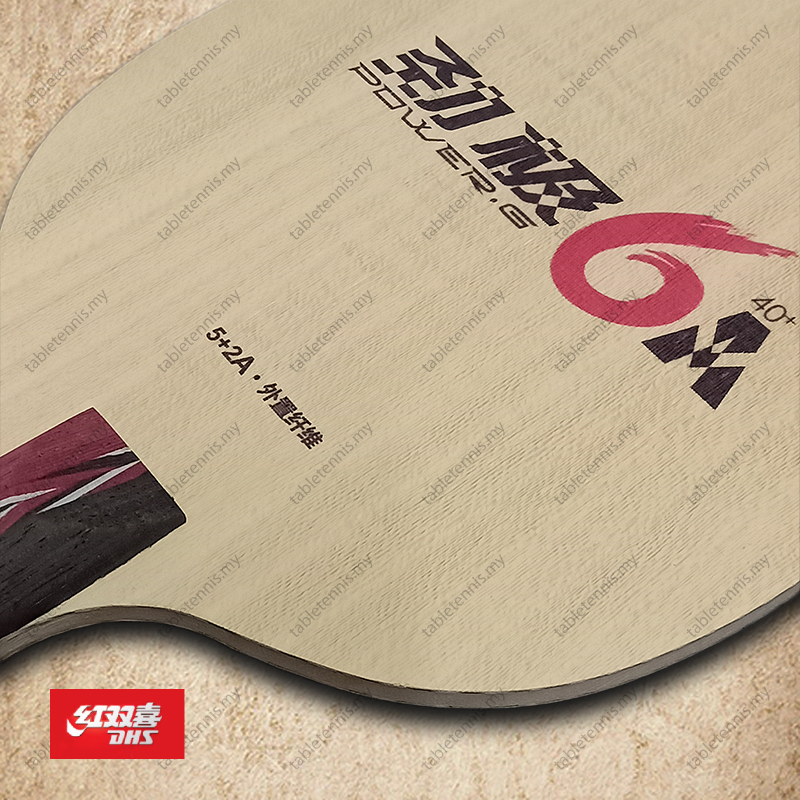
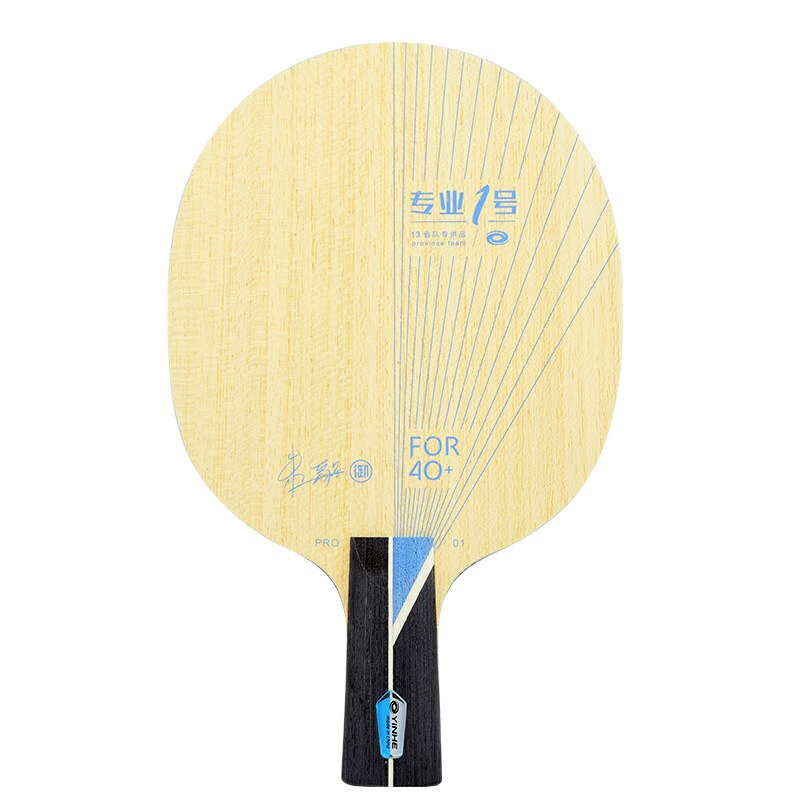
The DHS Power G 6A (around $45) and Yinhe Pro-01 (around $55) share a construction category but speak completely different dialects of the same language. Here's how their feel signatures diverge across three power levels.
Light Touch: Dead vs. Alive
At low power—pushes, passive blocks, short receives—the difference jumps out immediately.
Power G 6A has a noticeably higher activation threshold. The external ALC layers sit there waiting for you to mean it. A light push produces a muted response; the carbon doesn't engage, and the deformation feels compressed. If you're coming from an all-wood blade, the 6A might initially feel "dead" at low impact. The pocketing is there, but it's shallow—not enough to give you that reassuring sink before you commit to the return.
Pro-01 wakes up faster. Its proprietary KLC (Kong Long Carbon) construction engages at a marginally lower threshold. The same light push produces a more alive sensation—the carbon seems to "breathe" under the surface, ready but not jumpy. The pocketing is slightly deeper, giving you a more confident cushioning feel during passive exchanges. It's not plush—this is still external ALC, not a five-ply all-wood—but it's informative. Your hand knows where the ball is.
Medium Power: Punch vs. Flow
This is where the two blades really split.
Power G 6A's Ayous core starts expressing itself at medium power. The blade flexes visibly during the stroke, stores energy in the composite core, then releases it through the ALC layers with a sharp catapult. The ball leaves with a noticeable snap. The arc flattens, the trajectory compacts. It's punchy—it wants to finish the point in one decisive stroke. Spin generation is solid here, driven by core compression and carbon spring working together.
But the release is abrupt. There's a clear moment where the carbon "fires," and if your timing isn't locked in, that snap can work against you. The 6A rewards precision; it doesn't tolerate sloppy strokes.
Pro-01 responds with a completely different signature. The KLC construction produces a more integrated feel—carbon and wood act as one system rather than a layered sandwich. The deformation is there, but the catapult comes on smoothly, not suddenly. Where the 6A delivers a punch, the Pro-01 delivers a flowing acceleration. Loopers who build points through spin variation and rally consistency will notice: the Pro-01's medium-power output is more predictable, less subject to minor timing hiccups.
Pocketing depth also favors the Pro-01 at this level. The ball sinks in for a fraction longer, giving you that satisfying "hold" before release. The 6A isn't shallow—external ALC never is—but its dwell phase is more abbreviated.
Maximum Power: Who Holds Together?
At full power—counter-loops, smashes, late-stage kills—both blades show their true colors.
Power G 6A goes full aggressive. The Ayous core compresses to its limit, and the ALC layers fire with maximum efficiency. The ball exits fast and flat, almost violently. The trajectory barely arcs—it's a heat-seeking line drive. For the fast-attacker who wants one shot to end the rally, this is the mode that justifies the blade's existence.
But here's the catch: at maximum output, the sweet spot narrows sharply. Off-center hits lose energy disproportionately. The blade's stiffness becomes a liability rather than an asset when you don't find the center. Miss by a few millimeters and the shot quality falls off a cliff.
Pro-01 maintains better composure at peak output. The KLC integration provides a degree of forgiveness the 6A simply doesn't have. Off-center strikes retain more energy, and the trajectory stays workable instead of diving. The catapult is present but less explosive—the acceleration curve is more graduated. For players who generate their own power through loop mechanics rather than relying on blade-generated pace, this composure is a real advantage.
Spin production at maximum power is comparable. Both transmit the rubber's spin potential effectively. Any difference traces to rubber pairing, not blade character.
Conclusion: Punch Timer vs. Rhythm Looper
These two blades share a family resemblance but have completely different temperaments.
Power G 6A rewards aggressive, precise timing. It has a higher activation threshold that filters out inadvertent inputs, and a punchy catapult that amplifies committed strokes. If your game is about finding the right moment and exploding through it, the 6A is your kind of tool. Just know that it punishes imprecision.
Pro-01 offers a more balanced amplitude response. Its lower activation threshold and smoother power curve make it more tolerant of timing variation. The pocketing is slightly deeper, the catapult is smoother, and the overall feel is more integrated. If you build points through rhythm and consistency rather than explosive timing, the Pro-01 matches that style.
The price gap—around $10—tracks to genuine feel differences, not just branding. But don't choose based on price. Choose based on your power generation style: do you want a blade that punches on command, or one that flows with your rhythm?
© 2026 PaddleWiz. All rights reserved.
This article may not be reproduced or redistributed without proper attribution to PaddleWiz.
Find Your Perfect Paddle Setup
Answer a few questions and get a personalized blade + rubber recommendation.
Try PaddleWiz →