DHS Hurricane Long 5X vs Long 5: Amplitude Divergence in Inner-Carbon Architecture
The Long 5X and Long 5 share the same inner ALC blueprint and similar pricing, yet deliver fundamentally different amplitude feedback. This analysis traces the divergence through three power levels.
Introduction: Same Blueprint, Different Amplitude
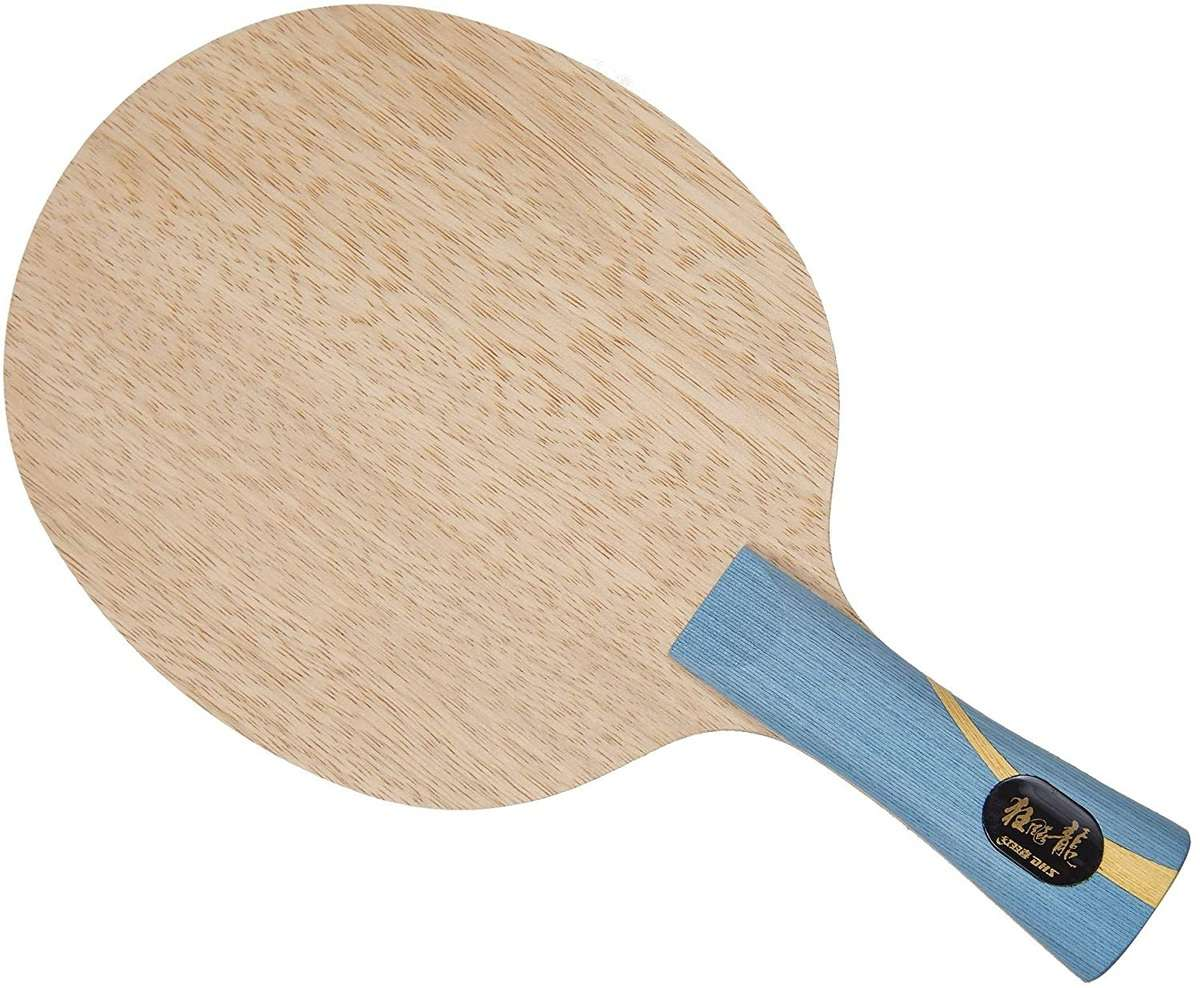
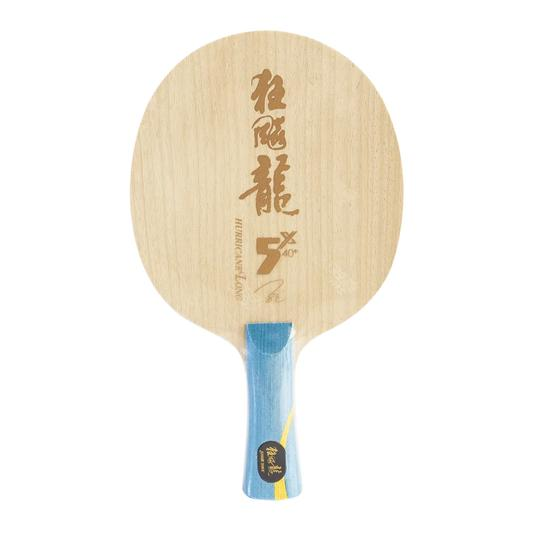
The DHS Hurricane Long 5 and DHS Hurricane Long 5X share a 5-wood + 2 inner ALC construction and sit at similar price points (check product pages for current pricing). On paper, they look interchangeable. They are not.
The key structural difference: the Long 5X uses BBT+ (enhanced beam reinforcement) versus standard BBT in the Long 5, along with slightly greater thickness (6.0–6.1mm vs 5.9–6.0mm) and weight (88–92g vs 85–90g). These modest shifts produce a fundamentally different amplitude signature at each power level.
Light Touch: Clear Signal vs. Muted Stability
At low power—pushes, blocks, drop shots—both blades operate below the carbon-layer activation threshold, but their feedback diverges immediately.
The Long 5 transmits a cleaner micro-vibration to the hand. Its standard BBT allows surface deformation to travel through the blade with less attenuation, giving a more "present" sense of ball contact. Surface deformation at light touch measures approximately 0.3–0.5mm.
The Long 5X dampens that signal. The BBT+ reinforcement absorbs lighter impacts at the surface layer before they reach the carbon structure, producing a more "solid" but less communicative feel. Deformation runs shallower at 0.2–0.4mm. Players who read touches through tactile feedback will find the Long 5 more transparent; those who prefer a stable, quiet platform may prefer the Long 5X.
Medium-Power Rallies: Linear vs. Non-Linear Deformation
This is where the divergence becomes pronounced.
The Long 5 responds linearly—deformation scales proportionally with force, dwell time extends smoothly, and vibrational frequency stays consistent. Input and output correlate cleanly. Dwell times in the medium range run approximately 8–12ms, predictable across strokes.
The Long 5X responds non-linearly. Its elevated activation threshold means medium-power impacts may feel initially stiffer than the Long 5—but once that threshold is crossed, deformation goes deeper than the Long 5 for equivalent force. Dwell times become variable: shorter at the lower end of medium power (counterintuitively), extending to 10–14ms at the upper end. This creates an asymmetric dwell-release signature that demands a calibration period but rewards players who vary their power output with a broader amplitude palette.
The 40+ plastic ball amplifies this difference. Its higher inertial mass pushes more strokes into the deeper deformation zone where the Long 5X's additional energy return provides a compensatory boost; the Long 5 simply returns what you put in.
Maximum Power: Crisp Rebound vs. Deep Catapult
At full commitment, both blades reach their deformation limits but behave very differently on release.
The Long 5 delivers a crisp rebound—the deformed structure snaps back to equilibrium quickly, the ball leaves the face cleanly, and there is minimal lingering vibration. Maximum deformation reaches ~2mm. The feel is direct and transparent: what you put in is what you get out, with no dwell-time ambiguity.
The Long 5X delivers a deep catapult—deformation reaches ~2.5mm, and the release cycle takes fractionally longer as the deeper stored energy discharges. This extended dwell provides marginally higher ball speed for equivalent mechanics, but requires the player to "stay with the ball" through the full deformation cycle rather than cutting out early. Players who time this correctly often report a sense of greater power potential.
The BBT+ Factor
The core differentiator is structural, not cosmetic. BBT+ increases the elastic modulus while maintaining toughness, creating a blade that resists initial deformation more effectively but tolerates greater ultimate deformation. This produces the non-linear, threshold-dependent behavior in the Long 5X. The Long 5's standard BBT keeps it closer to a linear elastic model throughout its range.
Conclusion: Two Amplitude Solutions, Similar Cost
Neither blade is superior—they serve different mechanical profiles:
Long 5: Linear amplitude, clear tactile feedback, low activation threshold, crisp release. Suits players who read feel to calibrate strokes and prefer a tight input-output correlation.
Long 5X: Non-linear amplitude, elevated activation threshold, deeper post-threshold deformation, extended dwell-release. Suits power generators who can time the deeper deformation cycle and want their committed energy to translate into additional ball quality.
At comparable pricing, the choice is purely about amplitude preference—not budget.
| Parameter | Long 5 | Long 5X |
|---|---|---|
| Construction | 5-wood + 2 inner ALC | 5-wood + 2 inner ALC |
| Technology | BBT (standard) | BBT+ (enhanced) |
| Thickness | 5.9–6.0mm | 6.0–6.1mm |
| Weight | 85–90g | 88–92g |
| Activation Threshold | Lower | Higher |
| Max Deformation | ~2mm | ~2.5mm |
| Response Character | Linear | Non-linear |
| Light-Touch Feel | Communicative | Stable/muted |
| Medium-Power Dwell | Consistent | Variable |
| Max-Power Release | Crisp | Deep catapult |
This article was originally published on PaddleWiz. Reproduction in whole or in part without written permission and proper attribution is prohibited.
© 2026 PaddleWiz. All rights reserved.
This article may not be reproduced or redistributed without proper attribution to PaddleWiz.
Find Your Perfect Paddle Setup
Answer a few questions and get a personalized blade + rubber recommendation.
Try PaddleWiz →