DHS Hurricane Bo 2X: Core-Protecting Amplitude in Budget Inner-Carbon Construction
At around $60, the Bo 2X employs DHS's Core-Protecting bonding to preserve wood-like vibration while delivering inner-carbon power. How does its amplitude profile differ from the Hurricane 301 and the Pro-05?
Technical Architecture: Core-Protecting Bonding
The DHS Hurricane Bo 2X is an engineering exercise in amplitude preservation within cost-constrained manufacturing. At around $60, this 5-wood + 2-inner Ar-Carbon structure employs DHS's proprietary Core-Protecting adhesive system—designed to prevent carbon layers from over-dampening the wood substrate beneath.
| Parameter | Specification |
|---|---|
| Face Material | Koto (import-grade) |
| Core | Ayous with Core-Protecting bond layer |
| Carbon | Inner AC (Ar-Carbon), symmetric layup |
| Thickness | 6.0–6.1mm |
| Weight | 86–91g |
| Speed | OFF to OFF+ |
The Core-Protecting system modulates the elastic interface between carbon plies and wood core, resisting the "deadening" effect common in conventional inner-carbon layups. The result: wood-like micro-vibration preserved alongside carbon's structural rigidity.
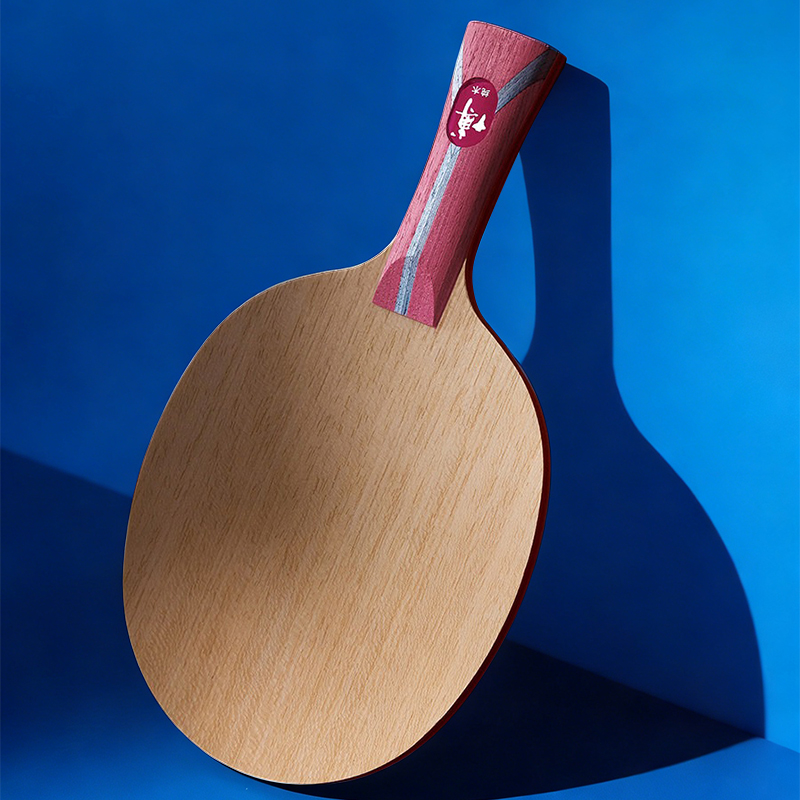
Light Touch: High-Information Vibration vs. Shallow Deformation
At low power—pushes, blocks, drop shots—the Bo 2X shows a tension between surface deflection depth and micro-vibration transmission.
The Koto facings provide firm support with subtle give, creating a shallow deformation zone. The Core-Protecting bond layer is critical here: it allows micro-vibration to propagate through the structure, producing an "information-rich" feel that communicates ball spin, speed, and trajectory.
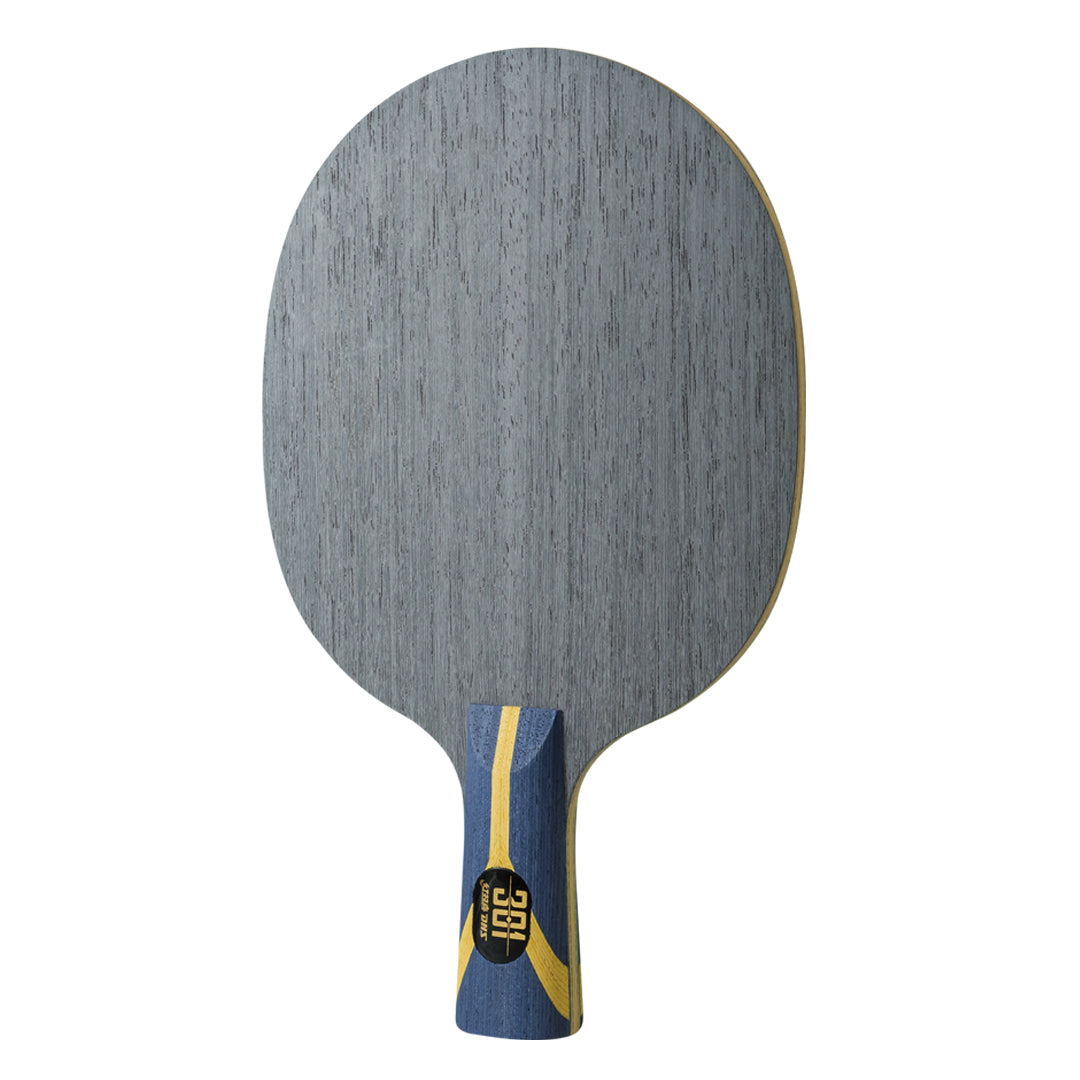
Compared to the DHS Hurricane 301: the 301's Limba facing and thinner profile (5.9mm) create slightly softer initial compliance and a more linear response curve, but with less micro-vibration amplitude. The Bo 2X trades a bit of forgiveness for superior tactile feedback at light touch.
| Characteristic | Bo 2X | Hurricane 301 |
|---|---|---|
| Light-touch deformation | Moderate | Shallow-to-moderate |
| Micro-vibration | High | Moderate |
| Surface feel | Crisp | Soft |
Medium-Power Rallies: Progressive Resistance with Delayed Activation
As impact enters the medium range—controlled topspin rallies, mid-distance exchanges—the Bo 2X enters a non-linear deformation zone. Two mechanisms interact: the Ayous core compresses elastically, while the inner Ar-Carbon plies resist further deflection. The Core-Protecting layer delays the carbon engagement, producing a progressive resistance curve rather than the abrupt threshold jump typical of standard inner-carbon constructions.
This creates three observable effects:
- Extended dwell: Slightly longer ball-to-face contact than pure wood blades, aiding spin generation
- Gradual stiffness increase: Resistance builds progressively, providing consistent feel across a range of impact forces
- Controlled rebound velocity: No unexpected "kick"—rally tempo remains predictable
Compared to the Galaxy Pro-05: the Pro-05 engages its carbon at lower impact forces, producing more linear response but sacrificing some of the wood-like amplitude feedback. The Bo 2X preserves feel transparency; the Pro-05 offers more consistent power delivery.
| Characteristic | Bo 2X | Pro-05 |
|---|---|---|
| Medium-power deformation | Progressive | More linear |
| Activation threshold | Later | Earlier |
| Dwell time | Extended | Shorter |
| Feel quality | Vibration-rich | Slightly dampened |
Rubber pairing note: Chinese tacky rubbers like Hurricane 3 Neo complement the Bo 2X's dwell characteristics; hybrid tensors like 729 Battle 2 leverage the extended dwell for additional sponge activation.
Maximum Power: Deep Deformation + Controlled Release
At full commitment, the Bo 2X enters its high-force deformation zone. The combined structure deflects to its elastic limit—Ayous core compresses maximally, Koto face and carbon plies bend under load—and releases with controlled, not explosive, velocity. The Core-Protecting layer prevents harshness in the release transition.
Three blades, three philosophies at maximum power:
Bo 2X: Deep deformation + controlled release. Flexes significantly, stores substantial energy, releases with cushioned power.
Hurricane 301: Moderate deformation + consistent response. Thinner, lighter structure "runs out" of deformation capacity earlier—less power ceiling but more predictable trajectory.
Pro-05: Moderate deformation + explosive release. Carbon engages aggressively at high force, producing snappier rebound but less depth perception. Feels "faster" off the table; Bo 2X provides more "weight" in the shot.
Under 40+ plastic balls, the Bo 2X's deep deformation capacity provides adequate energy storage for accelerating the heavier ball, while the controlled release maintains trajectory precision—effective for opening loops against heavy backspin and aggressive counter-looping exchanges.
Conclusion: Amplitude Profile and Technical Fit
The Bo 2X's signature—moderate-to-deep deformation, preserved micro-vibration, progressive resistance, controlled release—matches specific technical profiles:
Aligned with players who:
- Prioritize feel transparency over explosive power
- Employ loop-dominant strategies requiring dwell for spin loading
- Play medium-to-long distance where trajectory control supersedes raw speed
- Need deep deformation capacity for 40+ ball acceleration
Mismatch for players who:
- Require maximum power ceiling beyond OFF+
- Prefer linear, consistent response across all force levels (Pro-05 serves this better)
- Prioritize soft-touch forgiveness over vibration feedback (301 serves this better)
At around $60, the Bo 2X delivers amplitude characteristics that compete with blades at substantially higher price points. The Core-Protecting construction is genuine engineering, not marketing—inner-carbon power with wood-like feel at a budget price point is a rare combination.
This article was originally published on PaddleWiz. Reproduction in whole or in part without written permission and proper attribution is prohibited.
© 2026 PaddleWiz. All rights reserved.
This article may not be reproduced or redistributed without proper attribution to PaddleWiz.
Find Your Perfect Paddle Setup
Answer a few questions and get a personalized blade + rubber recommendation.
Try PaddleWiz →