729 Yellow ALC vs Blue ALC: Same Price, Opposite Personalities
Both cost around $21. Both come from 729. But the Yellow ALC's internal carbon gives you a looping partner, while the Blue ALC's external carbon gives you a fast-attack weapon. Here's how they feel at every power level.
729 Yellow ALC and 729 Blue ALC share something rare: the exact same price tag—around $21. Same brand, same wood core, same price. You'd think they'd feel similar.
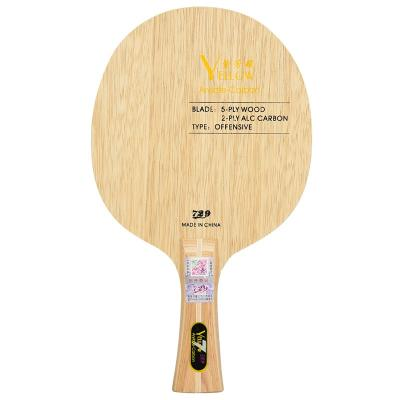
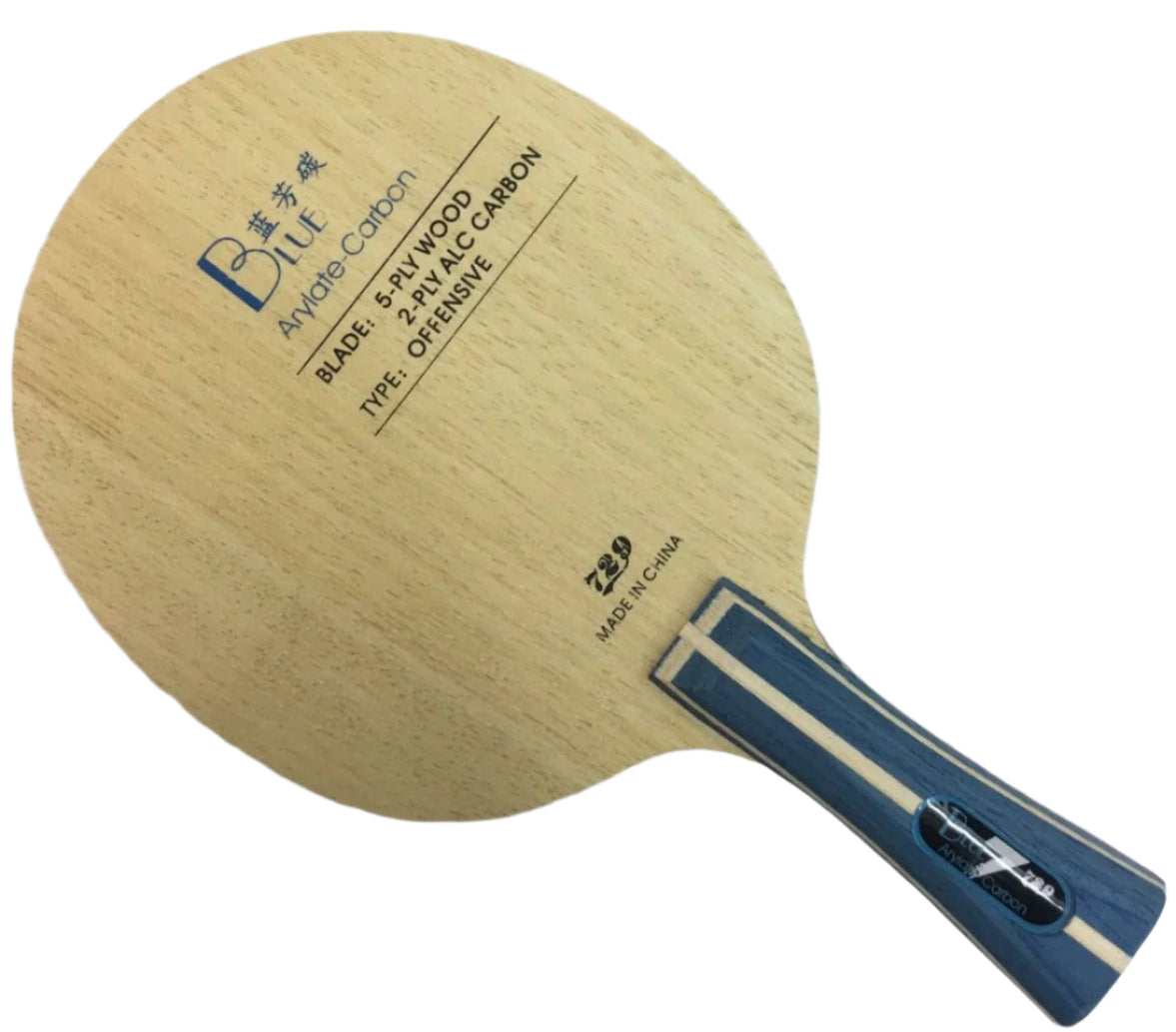
They don't. The Yellow ALC places its arylate-carbon layers internally, right next to the core. The Blue ALC places them externally, right under the surface. That single construction difference creates two completely different blades that happen to wear the same price sticker.
Light Touch: Quiet vs. Awake
At low power, these two blades tell you immediately who they are.
Yellow ALC is quiet. The internal carbon sits deep enough that light impacts don't wake it up. Short pushes, passive blocks, gentle receives—the ball sinks into the wood surface first, giving you clear, tactile feedback. The pocketing is generous for an ALC blade; you actually feel the ball dwell before committing. For players who value touch in the short game, this internal layout feels reassuringly familiar, almost like a pure-wood blade with hidden reserves.
Blue ALC is awake from the start. The external carbon sits right under the hitting surface, so even light contact meets stiffness immediately. The pocketing is compressed—shorter dwell, less sinking sensation. You can still feel where the ball hits, but the information comes faster and sharper. It's not harsh; it's just more immediate. If you're used to pure-wood sensitivity, the Blue ALC might initially feel like it's rushing you.
Medium Power: Whip vs. Snap
This is where the split becomes dramatic.
Yellow ALC's medium-power signature is all about the whip. Because the carbon sits internally, the outer wood plies compress first, then the ALC engages from the inside out. This creates a progressive, two-phase release—the ball loads, the blade flexes, then the stored energy releases in a smooth, accelerating curve. Loop drives feel natural and connected; the ball stays on the face long enough for your rubber to really grip it. Spin generation is easy and consistent. The catapult isn't explosive—it's flowing. You build your own power, and the blade helps you along.
Blue ALC snaps. The external carbon fires the moment the ball reaches the stiff layer, producing a quick, sharp catapult. The dwell window is noticeably shorter—there's less time for the rubber to brush the ball, so spin generation requires faster, more precise contact. But the speed payoff is immediate. Mid-distance drives leave the face with a crisp "pop" that the Yellow ALC simply can't match at this price point. The tradeoff is clear: less spin, more pace.
Maximum Power: Deep Well vs. Sharp Edge
At full power, both blades show their structural limits—and their true colors.
Yellow ALC keeps giving. The internal ALC provides a deep energy reserve that progressive strokes can drain gradually. Full-power loops produce strong arc and heavy spin, even if the absolute speed doesn't match external carbon. The sweet spot stays generous; off-center hits still produce workable shots with decent spin. For players who construct points through sustained looping and spin variation, this forgiveness at high power is exactly what they need.
Blue ALC peaks harder. At maximum output, the external carbon delivers speeds that clearly surpass the Yellow ALC. The trajectory flattens out and the ball explodes off the face. It's the faster blade, no question. But the sweet spot narrows sharply at full power. Miss the center by a few millimeters and the shot quality drops fast—less spin, less consistent trajectory. The Blue ALC demands precision at high power; it doesn't suffer sloppy contact.
Conclusion: Who Are You as a Player?
Same price, opposite personalities. The choice isn't about which is "better"—it's about what kind of player you are.
Yellow ALC is for loop-builders. If you win points through spin, arc, and patience—if you like the feeling of loading a ball and watching it curve away from your opponent—the internal carbon matches your rhythm. The deeper pocketing and progressive release reward the stroke you already have.
Blue ALC is for strikers. If you win points through pace, precision, and timing—if you love the feeling of catching a ball clean and watching it rocket off your paddle—the external carbon delivers that snap. The shorter dwell and sharper catapult fit a faster decision-making style.
At around $21, you're not compromising on quality either way. You're just choosing which personality you want to live with.
© 2026 PaddleWiz. All rights reserved.
This article may not be reproduced or redistributed without proper attribution to PaddleWiz.
Find Your Perfect Paddle Setup
Answer a few questions and get a personalized blade + rubber recommendation.
Try PaddleWiz →