729 Rosewood 5 vs Rosewood 7 vs Rosewood King KLC: Pure Wood Meets Carbon
Three rosewood blades from 729, three different personalities. The Rosewood 5 is all feel, the Rosewood 7 adds punch, and the King KLC adds carbon speed. Which rosewood matches your game?
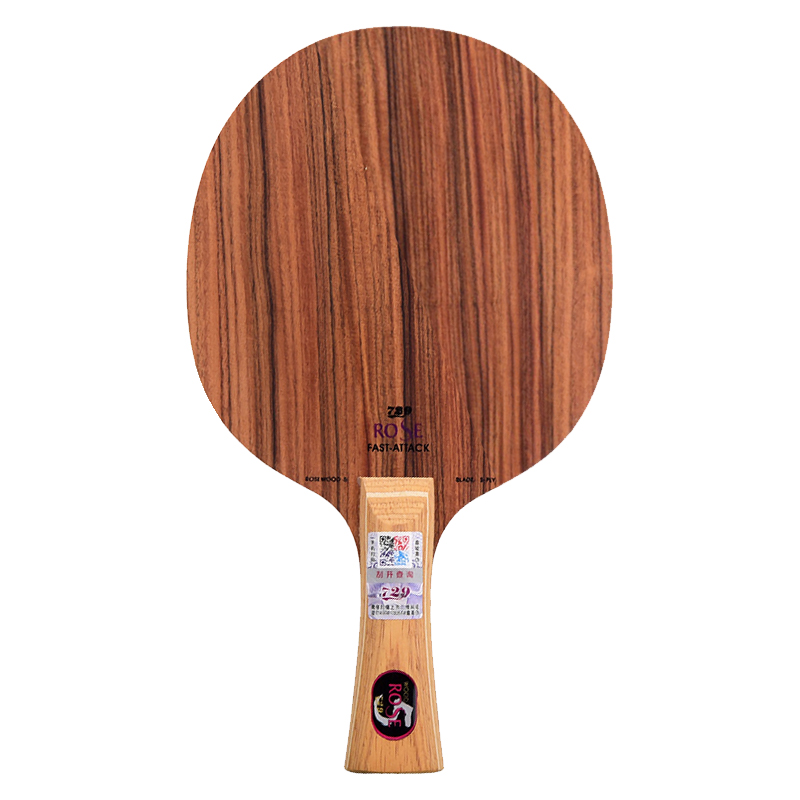
729 makes three rosewood blades that look similar on the shelf but play nothing alike. The Rosewood 5 (around $23) is a 5-ply pure wood. The Rosewood 7 (around $28) adds two more plies for extra punch. The Rosewood King KLC (around $50) adds Kevlar-Carbon layers under the rosewood face.
Same wood, three completely different deformation stories.
The Rosewood Feel: What They Share
All three share one thing: the rosewood outer ply. Rosewood has a distinctive character—it's denser and harder than limba or hinoki, giving the hitting surface a crisp, "alive" quality. The ball doesn't sink into rosewood the way it melts into hinoki; it sits on the surface more, giving you very direct, clear feedback about contact quality.
This shared rosewood character means all three blades communicate honestly. You always know where the ball hit and how clean the contact was. The difference is what happens after you feel it.
Light Touch: Three Levels of Sensitivity
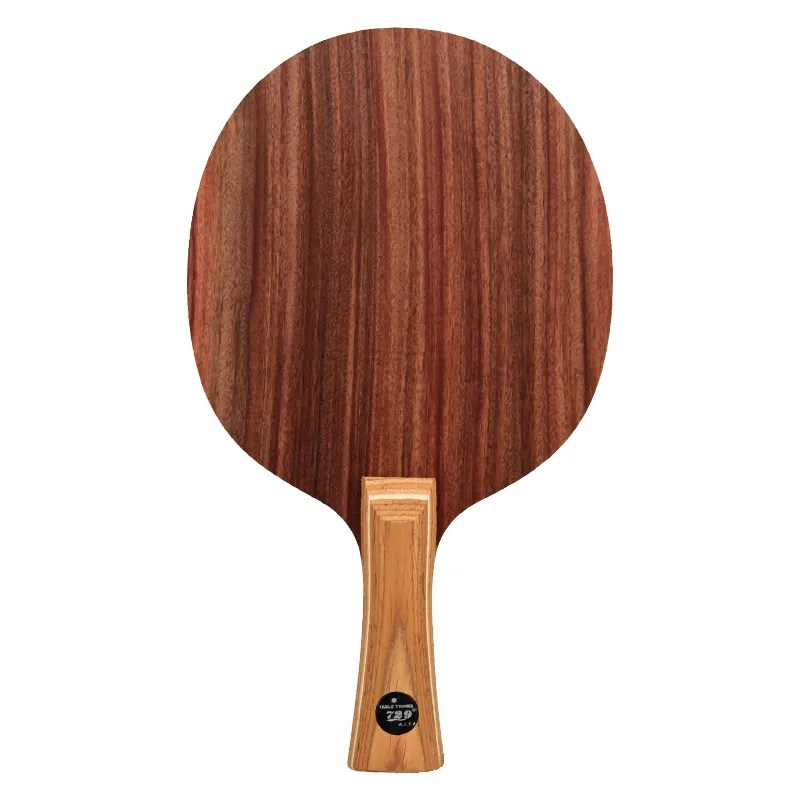
Rosewood 5 is the most sensitive tool in the trio. With only five plies of wood and no composite layers, the ball sinks deepest into this blade. The pocketing is generous—you can feel the ball settle before deciding what to do with it. Short pushes have real touch; delicate receives are easy to control. The activation threshold is very low; the blade responds to the slightest input. This is the short-game player's rosewood.
Rosewood 7 tightens the pocketing. Two extra plies mean the blade doesn't flex as easily under light impact. You still get feedback, but it's quicker and less generous. The ball doesn't sink as far before the blade pushes back. For players who found the Rosewood 5 too "soft" at low power, the 7 adds a bit more crispness without sacrificing the wood feel.
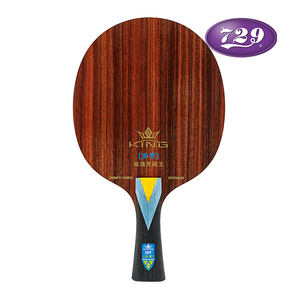
King KLC changes the conversation entirely. The Kevlar-Carbon layers under the rosewood face stiffen the response immediately. At light touch, the carbon doesn't really engage, but its presence makes the blade feel firmer than either pure-wood option. The pocketing is functional but not luxurious. You can still play short game with it, but you won't confuse it with a pure-wood blade. The information is there—it just arrives faster and with less dwell.
Medium Power: Where the Three Paths Diverge
At medium power, each blade's personality fully emerges.
Rosewood 5 is the spin doctor. The extended dwell and deep pocketing give the rubber maximum brush time. Medium-power loops generate heavy rotation with a high, arcing trajectory. The catapult is gentle—pure wood elasticity returns energy smoothly and proportionally. You put in moderate force, you get moderate speed with maximum spin. This blade wants you to spin the ball, not blast it.
Rosewood 7 shifts the balance toward pace. The extra plies store and release energy more aggressively than the 5-ply version. The catapult is noticeably stronger—medium drives leave the face faster, and the trajectory is more direct. You still generate good spin, but the 7 wants to move the ball forward, not just up. It's the bridge between feel and power in this trio.
King KLC brings carbon into the picture, and it changes everything. Once your stroke crosses the KLC's activation threshold, the catapult kicks in hard. The ball leaves the face with a speed that neither pure-wood rosewood can match. The trajectory flattens out, and the pace becomes genuinely threatening at medium power. But spin generation requires adjustment—shorter dwell means less brush time, so you need faster, more committed contact to maintain rotation levels.
Maximum Power: Wood Ceiling vs. Carbon Floor
At full power, the structural differences become limits.
Rosewood 5 hits the pure-wood ceiling gracefully. Full-power loops produce good speed and heavy spin, but there's no extra gear. The blade returns exactly what you put in—honest, proportional, no tricks. For players who prioritize consistency and spin over raw pace, this ceiling isn't a problem. But if you ever need to blast a ball past an opponent, the Rosewood 5 simply doesn't have that tool.
Rosewood 7 pushes the ceiling higher. The 7-ply construction stores more energy than the 5-ply, so full-power strokes produce noticeably more speed. It's still honest—no carbon snap, no surprise boost—but the extra plies deliver a higher maximum output. For loopers who occasionally need to finish a point with power rather than spin, the 7 is the better pure-wood option.
King KLC breaks through the wood ceiling entirely. The KLC layers add a carbon-assisted speed boost that pure wood simply cannot provide. Full-power drives, smashes, and counter-loops produce flat, penetrating trajectories that the Rosewood 5 and 7 can't replicate. But the carbon tax is real: the sweet spot shrinks at maximum power, and off-center hits are punished. The King KLC demands precision at high output. It gives you the speed, but only if you find the center.
Conclusion: Which Rosewood Fits Your Game?
Rosewood 5 is for the feel-first player. If you love deep pocketing, maximum spin generation, and the honest feedback of pure wood, this is your blade. It's also the cheapest entry point into the rosewood experience.
Rosewood 7 is for the power-oriented looper who still wants wood feel. The extra plies add pace without sacrificing the rosewood character. If the Rosewood 5 feels too soft but you're not ready for carbon, the 7 splits the difference perfectly.
Rosewood King KLC is for the player who wants rosewood touch with carbon speed. The KLC layers deliver genuine pace while the rosewood face maintains surface-level feel. It's the most versatile but also the most demanding—you need good technique to unlock the carbon without losing the wood.
At around $23, $28, and $50 respectively, these three blades cover a wide range of budgets and playing styles. Don't assume the most expensive one is "best" for you. Match the deformation characteristics to your game, not the price tag.
© 2026 PaddleWiz. All rights reserved.
This article may not be reproduced or redistributed without proper attribution to PaddleWiz.
Find Your Perfect Paddle Setup
Answer a few questions and get a personalized blade + rubber recommendation.
Try PaddleWiz →