729 Blue ALC vs Yinhe Pro-01: Budget External ALC vs the Standard
The 729 Blue ALC costs around $21 and the Pro-01 around $55. Both use external arylate carbon. Is the Pro-01 worth nearly three times the price, or does the Blue ALC punch above its weight?
Around $21 vs. around $55. The 729 Blue ALC and Yinhe Pro-01 both use external arylate carbon, both target fast-attackers, and both come from Chinese manufacturers. So what does the extra $34 actually buy you?
This isn't just a price comparison. It's a question of refinement—how much more polished does the Pro-01's KLC construction feel compared to the Blue ALC's budget take on the same concept?
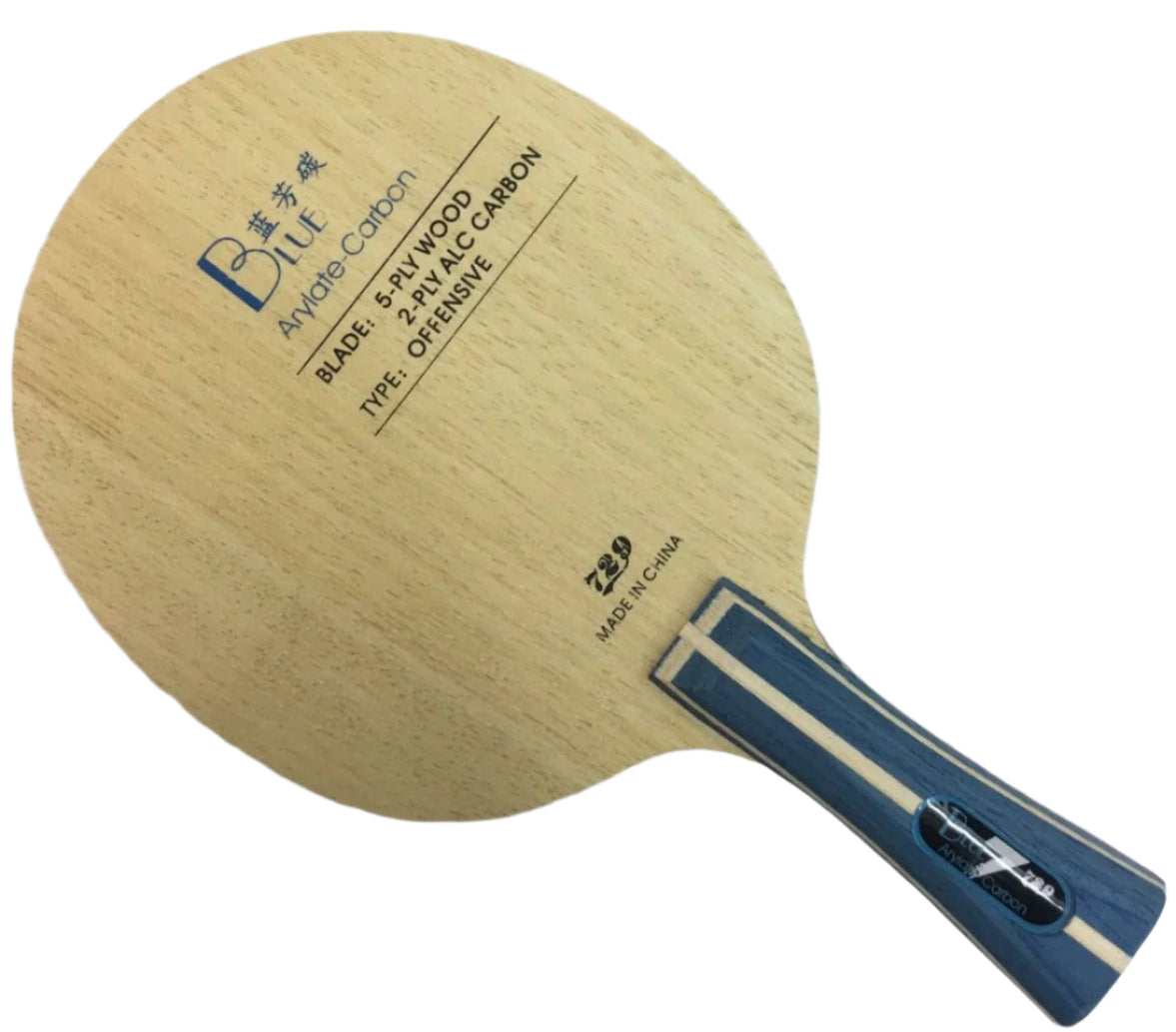
Light Touch: Where Refinement Shows First
At low power, the price gap shows up in feedback quality.
Blue ALC has a functional light touch. The external carbon makes its presence known immediately—the blade is stiff from first contact. Pocketing is present but compressed; you can feel where the ball hits, but the information is blunt. It's like getting a text message versus a phone call—same information, less nuance. Pushes and short receives are workable, but the blade doesn't really "communicate" with your hand. It's just... there.
Pro-01 has a more informative light touch. The KLC (Kong Long Carbon) construction engages at a slightly lower threshold, and the feedback is richer. The carbon "breathes" under the surface—you sense it sitting ready without it intruding on your touch play. Pocketing is a touch deeper, giving you that extra fraction of dwell that makes the difference between a confident push and an uncertain one. The blade tells you more about what the ball is doing.
Is the Pro-01's light touch three times better? No. But it's noticeably more comfortable, and for players who live in the short game, that comfort adds up.
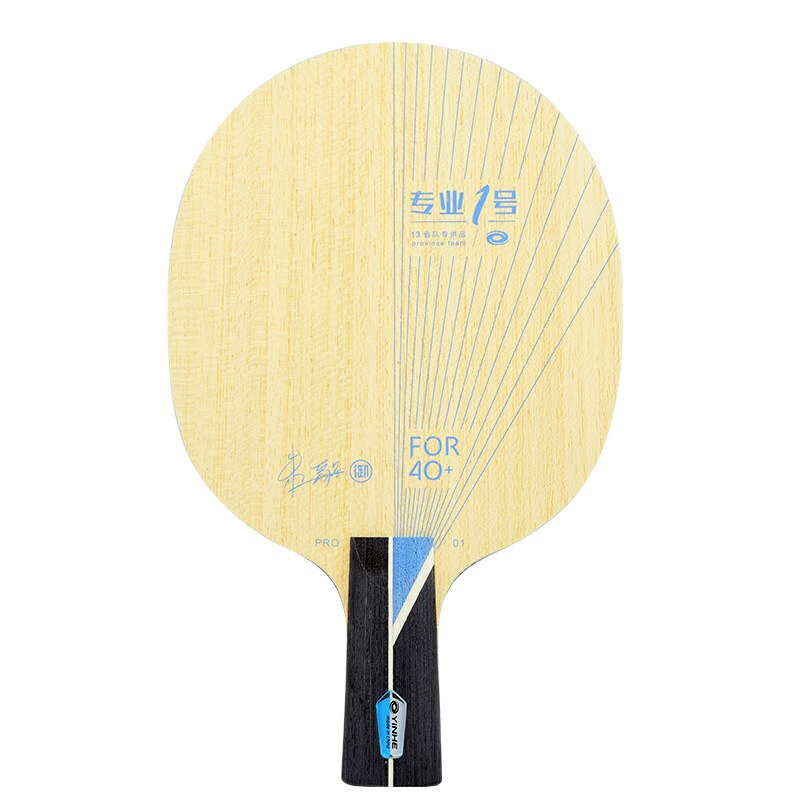
Medium Power: Competent vs. Integrated
At medium power, both blades deliver the external ALC experience—crisp release, flat trajectory, good pace. But the Pro-01 integrates the carbon feel more seamlessly.
Blue ALC's medium-power output is honest and effective. The carbon fires when you load it, the ball leaves fast, and the catapult is clearly present. But there's a slight disconnect—you can feel the moment where the wood stops and the carbon takes over. It's not jarring, but it's there. The two materials feel like they're cooperating, not fused.
Pro-01's KLC construction feels like one material, not two. The carbon and wood work as a unified system. The catapult comes on smoothly rather than switching on. This integration matters most in rally situations where you're hitting multiple medium-power drives: the Pro-01's output stays consistent shot after shot, while the Blue ALC can feel slightly inconsistent between strokes—sometimes the carbon engages fully, sometimes it doesn't, depending on your timing.
Spin generation at medium power favors the Pro-01. The slightly deeper pocketing gives the rubber more brush time, and the smoother energy curve means less timing pressure. The Blue ALC isn't bad at spin—it just requires more precise contact to match the Pro-01's output.
Maximum Power: Surprisingly Close
Here's where things get interesting. At full power, the gap narrows.
Blue ALC is genuinely fast at maximum output. The external carbon delivers real speed—fast enough that most intermediate players won't feel limited. Full-power drives, smashes, and counter-loops all leave the face with authority. The trajectory flattens aggressively. If you're coming from a pure-wood blade, the Blue ALC at full power will feel like a serious upgrade.
Pro-01 is faster still, but the margin isn't as wide as the price suggests. The KLC's extra refinement translates to maybe 5-8% more speed at maximum output. That's real but not transformative. The bigger difference is forgiveness: the Pro-01 maintains a wider sweet spot at full power. Off-center hits retain more energy and produce more consistent trajectories. The Blue ALC punishes off-center contact more severely—miss the sweet spot and the shot drops off.
So the Pro-01 doesn't buy you dramatically more top-end speed. It buys you more margin for error at that speed.
Conclusion: Value vs. Polish
The 729 Blue ALC is one of the best value carbon blades on the market. At around $21, it delivers real external ALC performance with genuine speed and a functional feel. If you're upgrading from a budget blade and want to experience what external carbon can do without spending $50+, the Blue ALC gets you there.
The Pro-01 at around $55 is the more refined tool. Better feedback at light touch, more integrated feel at medium power, wider sweet spot at full power. The KLC construction is simply better engineered—the materials work together more harmoniously.
But "better engineered" doesn't mean "three times better." The Blue ALC covers maybe 75-80% of the Pro-01's performance at 38% of the price. If you're on a budget or just exploring carbon blades for the first time, the Blue ALC is the smart starting point. The Pro-01 is for the player who's already committed to the external ALC style and wants the polished version.
© 2026 PaddleWiz. All rights reserved.
This article may not be reproduced or redistributed without proper attribution to PaddleWiz.
Find Your Perfect Paddle Setup
Answer a few questions and get a personalized blade + rubber recommendation.
Try PaddleWiz →